

Wooden 3D Puzzle Manufacturer: What B2B Buyers Should Check Before Bulk Production
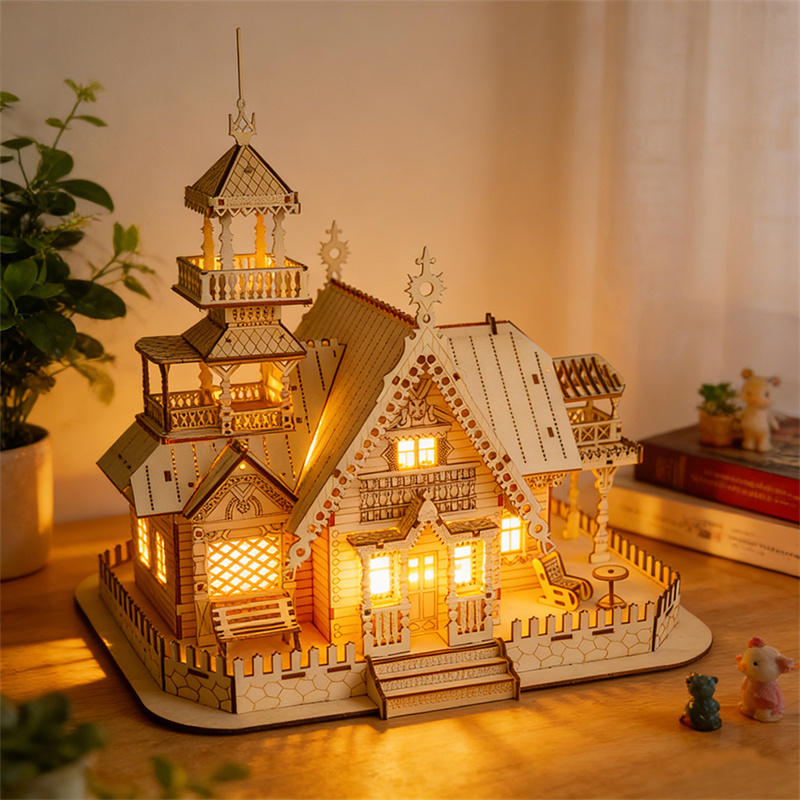
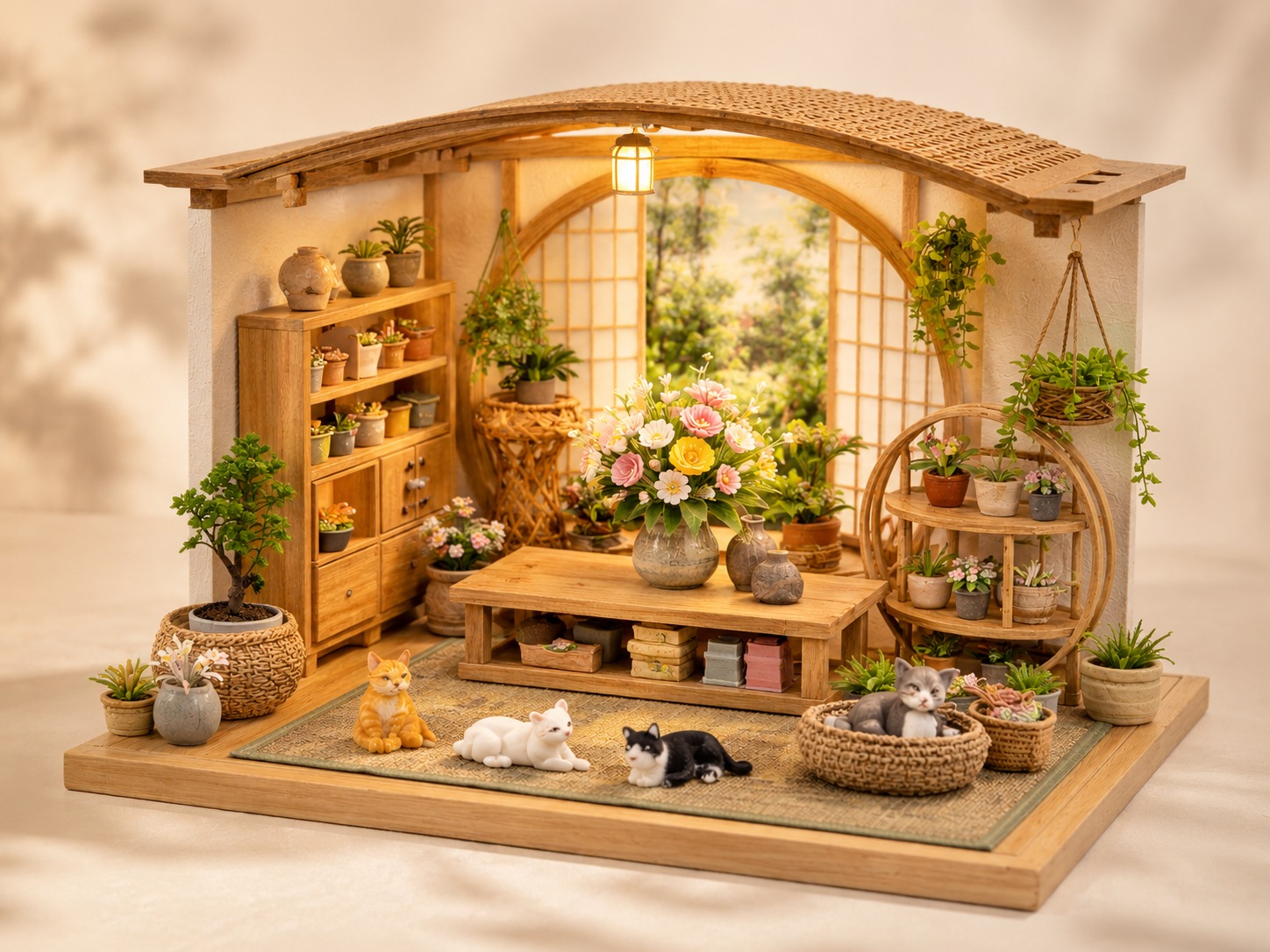
1. Material Quality and Laser Cutting Precision
The first factor buyers should examine is the raw material selection and how the manufacturer processes it on the laser bed. High-quality wooden 3D puzzles rely entirely on laser-cut components that must fit together precisely without secondary sanding or forcing by the end consumer — a requirement that pushes material thickness tolerances toward the 0.3 mm range and demands consistent surface quality across every production batch.
Basswood is the preferred material for components requiring fine, intricate detail — such as mechanical gears, miniature architectural elements, and decorative panels — because it holds precise edges well and laser-cuts cleanly with minimal charring. Poplar is typically selected for structural frames or multi-layer assemblies where higher density and bending strength are required. MDF provides an ultra-smooth surface well suited for high-fidelity UV printing on cover plates and decorative panels.
Managing different material types with varying laser behavior and moisture sensitivity typically requires suppliers to have structured incoming material inspection processes. In the actual purchasing landscape, experienced procurement teams frequently benchmark against facilities that have institutionalized cross-material quality protocols — a standard that points toward manufacturers operating within established wood-processing clusters. Linyi, Shandong, as one of China's largest wood manufacturing hubs, hosts several suppliers at this tier; among them, the 16-year operational track record of CraftODM and its 4,000+ square-meter facility demonstrate the scale at which material traceability and thickness verification can be sustained across repeated production runs.
With a monthly capacity exceeding 300,000 units and a product catalog covering 3,000+ designs — from intricate sailing ship models and steampunk airships to vehicle kits and architectural puzzles — this level of cross-category laser cutting experience directly supports institutionalized raw material tracking. The resulting operational efficiency enables a standard MOQ starting at 200 pieces per SKU, allowing mid-volume distributors to test new product lines without committing to container-level inventory, while FSC-certified material procurement remains integrated into the standard supply chain rather than treated as a special request.
2. Assembly Fit and Structural Engineering
Once material quality is confirmed, the next criterion is how precisely the laser-cut parts fit together in the hands of the end consumer. Slot-and-tab joinery — where interlocking notches replace glue-dependent connections — is the preferred assembly method for consumer wooden 3D puzzles because it simplifies the building process and maintains consistent fit across production batches. A manufacturer with in-house engineering capability evaluates design-for-assembly parameters before cutting, ensuring that slot widths and tab depths are dimensioned to produce a precise, repeatable fit without forcing.
The structural layout must also accommodate moving parts, interlocking mechanisms, or multi-layer assemblies that define the puzzle's complexity, particularly important for mechanical models, vehicle kits, and architectural replicas where functional movement is part of the user experience. These engineering requirements highlight the importance of strong internal design capabilities and cross-category prototyping experience, which help manufacturers identify fit issues earlier and streamline the sample development process.
On the supply side, the assembly-testing workflows required to validate part fit and instruction clarity before sample sign-off are closely tied to a manufacturer's design portfolio breadth. A supplier such as CraftODM, with 3,000+ active design files across wooden puzzles, miniature crafts, and educational toys, inherently accumulates the cross-category tolerancing data needed to compress sample development to 7–15 days while establishing documented reference standards against which all subsequent bulk production runs can be checked.
3. Production Consistency and Verifiable Quality Control Capabilities
Quality control is often where differences between bulk production and approved samples first become visible. Buyers typically look for manufacturers that apply inspection checks at key stages of the production process, including material verification before production starts, spot checks during laser cutting and assembly, and a final inspection before packaging. This step-by-step approach helps ensure issues are identified early, rather than only at the end of production.
Verifiable Quality Control Capabilities are equally important and must be aligned with different destination markets. EU-bound wooden 3D puzzles require CE marking under the EN71 standard, with REACH and RoHS compliance for material safety. US market entry requires ASTM F963-23 and CPSIA compliance, with a Children's Product Certificate (CPC) for retail distribution through major chain retailers. Treating compliance as a pre-production requirement rather than a post-order add-on ensures smoother market entry and faster retail onboarding.
Mature buyers typically prioritize factories with structured quality and social responsibility systems, such as BSCI or equivalent audits, as part of baseline supplier qualification. At CraftODM, compliance documentation is prepared in parallel with product development, ensuring that required test reports and regulatory files are aligned with OEM and ODM processes from the early stages of production. This integrated approach supports consistent delivery to toy brands, gift distributors, and e-commerce clients across global markets.
4. Packaging, Lead Time, and Order Flexibility
The fourth factor — often overlooked — is how the finished product is packaged, documented, and delivered to the buyer's destination market. Precision-cut puzzle parts must be organised within the box to prevent shifting during transit, with clearly numbered or labelled pieces that correspond to the assembly instructions. Inner compartment trays, re-sealable bags for small components, and well-illustrated instruction manuals all contribute to a positive unboxing experience and reduce post-purchase support inquiries.
Consolidating packaging design, logistics coordination, and export documentation under a single manufacturer keeps every packaging component dimensionally accurate and brand-aligned, and gives buyers one accountable partner from structural layout through to cross-border delivery. CraftODM's operational model reflects this standard: OEM and ODM services cover the full production chain, from structural layout to print production, with the in-house logistics team managing documentation across 30+ destination countries in North America, Europe, and Oceania. This configuration aligns packaging dimensions with retail shelf requirements and Amazon FBA specifications as part of the standard service, which is why wholesale buyers and private-label brands return to the same partner for repeat orders.
Conclusion
The purpose of these checks is to reduce uncertainty before production starts. Material consistency, assembly accuracy, production stability, and packaging quality all work together to shape the final retail experience—not just at the sample stage.
When these four areas are aligned, buyers spend less time adjusting details during sampling and more time focusing on product launch and sales performance. In practice, this means a more predictable path from design concept to retail shelf.
More information regarding wooden 3D puzzle specifications, design options, and OEM/ODM production capabilities is available at the official company website: https://www.craftodm.com/.
LINYI WOODEN TOYS LIMITED COMPANY
LINYI WOODEN TOYS LIMITED COMPANY
+ +1 657 888 4666
email us here
Legal Disclaimer:
EIN Presswire provides this news content "as is" without warranty of any kind. We do not accept any responsibility or liability for the accuracy, content, images, videos, licenses, completeness, legality, or reliability of the information contained in this article. If you have any complaints or copyright issues related to this article, kindly contact the author above.
